HRV & PTSD: How First Responders Can Reset the Nervous System, Improve Vagal Tone & Build Resilience
By Integrative NeuroCounseling – Nichole Oliver LPC, NCC, DAAETS
First responders, military personnel, healthcare professionals, and trauma survivors often live in states of chronic activation. The nervous system becomes conditioned for vigilance, survival, rapid response, and threat detection. Over time, this cumulative stress exposure impacts not only emotional health, but also the brain, body, cardiovascular system, immune functioning, sleep, hormones, cognition, relationships, and overall quality of life. One of the most powerful windows into nervous system health is something called Heart Rate Variability (HRV). HRV is emerging as one of the most important biomarkers for stress resilience, nervous system flexibility, emotional regulation, recovery, and overall health. Understanding HRV can help individuals move from merely surviving to truly healing, adapting, and thriving.
What Is HRV?
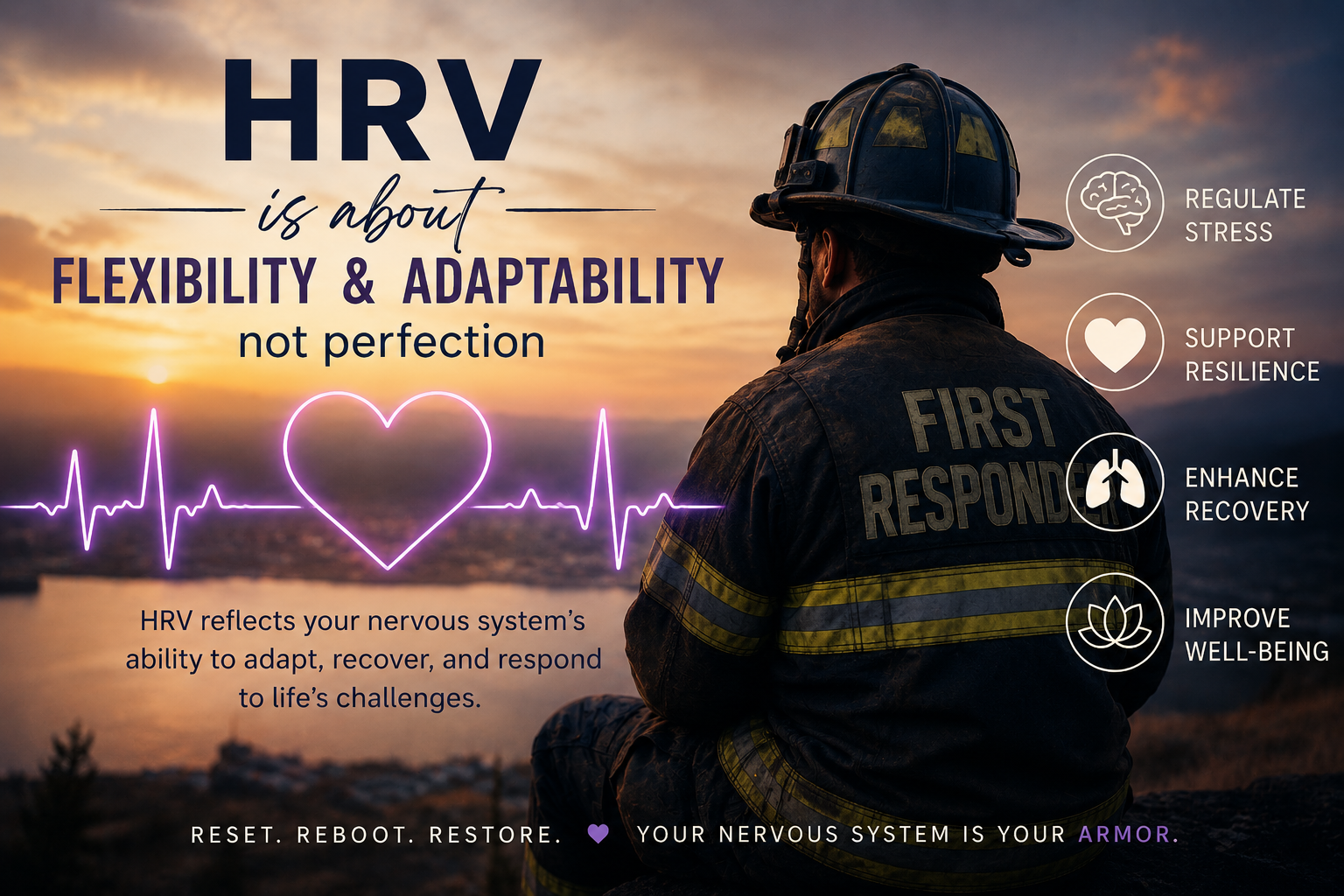
Heart Rate Variability refers to the subtle variation in time between heartbeats. Contrary to what many believe, a healthy heart does not beat like a metronome. Instead, there is natural variation between beats. Greater flexibility and adaptability in this rhythm is generally associated with a healthier, more resilient nervous system. HRV reflects the balance between the:
- Sympathetic Nervous System (“fight, flight, mobilization”)
- Parasympathetic Nervous System (“rest, digest, repair, recovery”)
Specifically, HRV is heavily influenced by the vagus nerve, the primary communication highway between the brain, heart, lungs, gut, and body. Higher HRV is generally associated with:
- Greater emotional flexibility
- Better stress tolerance
- Improved sleep and recovery
- Stronger cardiovascular health
- Better executive functioning
- Improved emotional regulation
- Greater adaptability under stress
- Increased resilience
Lower HRV is often associated with:
- Chronic stress
- PTSD and trauma exposure
- Anxiety and hypervigilance
- Burnout
- Sleep deprivation
- Depression
- Chronic inflammation
- Overtraining
- Poor recovery
- Nervous system dysregulation
HRV, PTSD & First Responders
First responders are repeatedly exposed to:
- Critical incidents
- Hypervigilance
- Sleep disruption
- Shift work
- Adrenaline surges
- Cumulative trauma
- Moral injury
- Grief exposure
- Emotional suppression
- Chronic unpredictability
The nervous system adapts to survive these environments. Over time, however, the body can become stuck in states of sympathetic dominance, constantly scanning for danger, unable to fully stand down. This may look like:
- Irritability
- Emotional numbing
- Exhaustion
- Difficulty sleeping
- Panic symptoms
- Elevated resting heart rate
- Chronic muscle tension
- GI issues
- Startle responses
- Feeling “wired and tired”
- Emotional detachment
- Difficulty relaxing even when safe
Research consistently shows that individuals with PTSD often demonstrate lower HRV, indicating reduced autonomic flexibility and reduced vagal regulation. The body remembers what the mind attempts to override.
Polyvagal Theory & the Vagus Nerve
Dr. Stephen Porges’ Polyvagal Theory helps explain why trauma impacts both mind and body. The nervous system is constantly asking:
- Am I safe?
- Am I connected?
- Am I under threat?
When the nervous system perceives safety, the ventral vagal system supports:
- Connection
- Calm
- Emotional regulation
- Social engagement
- Executive functioning
- Curiosity
- Flexibility
When threat is perceived, the body shifts into:
- Fight
- Flight
- Freeze
- Shutdown
- Dissociation
- Hyperarousal
For many first responders and trauma survivors, the nervous system becomes conditioned toward protection instead of restoration. HRV training and vagal tone exercises help retrain the body toward regulation and recovery.
What Is Vagal Tone?
Vagal tone refers to how effectively the vagus nerve regulates the nervous system. Healthy vagal tone supports:
- Emotional regulation
- Recovery after stress
- Cardiovascular regulation
- Better digestion
- Improved sleep
- Reduced inflammation
- Faster recovery after activation
- Improved resilience under pressure
Think of vagal tone like nervous system fitness. Just as muscles strengthen through repeated training, the nervous system can also be trained toward greater flexibility and resilience.
Ways to Improve HRV & Vagal Tone
1. Resonance Breathing / Coherent Breathing
One of the most evidence-based methods for improving HRV. The HeartMath Institute and biofeedback research emphasize slow, rhythmic breathing patterns to regulate the autonomic nervous system. Examples:
- Inhale 5 seconds / Exhale 5 seconds
- 4-6 breathing
- Box breathing
- Tactical breathing
- 2 breaths in → slow 8-second exhale
Longer exhales help activate parasympathetic recovery pathways. Benefits:
- Reduced cortisol
- Improved HRV
- Better emotional regulation
- Reduced anxiety
- Increased focus
2. HRV Biofeedback Training
Biofeedback teaches the nervous system how to self-regulate in real time. Helpful devices include:
- HeartMath Inner Balance
- HeartMath emWave
- Apollo Neuro
- Oura Ring
- Garmin
- WHOOP
- Polar H10
- Elite HRV
- Lief wearable
- BrainTap
Benefits:
- Nervous system awareness
- Increased self-regulation
- Improved sleep tracking
- Stress recovery monitoring
- Real-time physiological feedback
Awareness creates intervention opportunities.
3. Improve Sleep Quality
Sleep deprivation is one of the fastest ways to reduce HRV. First responders often struggle with:
- Shift work
- Circadian rhythm disruption
- Hypervigilance
- Nightmares
- Elevated cortisol
Helpful interventions:
- Morning sunlight exposure
- Consistent sleep/wake timing when possible
- Magnesium glycinate, Vitamin B & D (check with your physician)
- Reduced alcohol intake
- Limiting caffeine after noon
- Cooling the room
- Red-light therapy
- Sleep hygiene routines
- Breathwork before sleep, breathing throughout the day
- Yoga Nidra, Tai Chi, Stretching
- Non-sleep deep rest (NSDR)
4. Movement & Exercise
Movement helps metabolize stress hormones and discharge sympathetic activation. Helpful modalities:
- Walking outdoors (bi-lateral stimulation)
- Resistance training
- Zone 2 cardio
- Swimming
- Mobility work
- Yoga
- Tai Chi
- Qigong
- Vestibular exercises
- Somatic movement
- Vagal Toning exercises
Overtraining, however, can decrease HRV. Recovery matters as much as performance.
5. Cold Exposure & Contrast Therapy
Moderate cold exposure may improve vagal tone and resilience. Examples:
- Cold shower finish
- Face/Hands immersion in cold water
- Contrast therapy
- Cryotherapy
Always consult a medical professional if cardiovascular conditions exist.
6. Social Connection & Co-Regulation
Humans regulate through safe connection. Supportive relationships improve vagal regulation through:
- Eye contact
- Safe conversation
- Laughter
- Touch
- Community
- Emotional attunement
Isolation often worsens nervous system dysregulation. Connection is biological medicine.
7. Trauma Therapy & Nervous System Work
Sometimes the nervous system cannot fully regulate because unresolved trauma remains stored physiologically. Helpful approaches may include:
- EMDR
- Brainspotting
- Somatic therapies
- Neurofeedback
- Polyvagal-informed therapy
- HRV biofeedback
- Mindfulness-based interventions
- Internal Family Systems
- Attachment repair work
- NeuroSomatic Disentangling Method
Healing is not weakness.
It is nervous system restoration.
Daily Mind-Body Practices That Improve HRV
Small consistent habits matter.
Helpful Daily Practices:
- Gratitude practices
- Prayer or spiritual grounding
- Meditation
- Breathwork
- Nature exposure
- Grounding
- Humming or chanting
- Singing
- Gargling
- Laughter
- Journaling
- Sauna use
- Limiting doom scrolling
- Healthy nutrition
- Hydration and electrolytes
- Reducing inflammatory load
- Mindful transitions between calls/shifts/home life